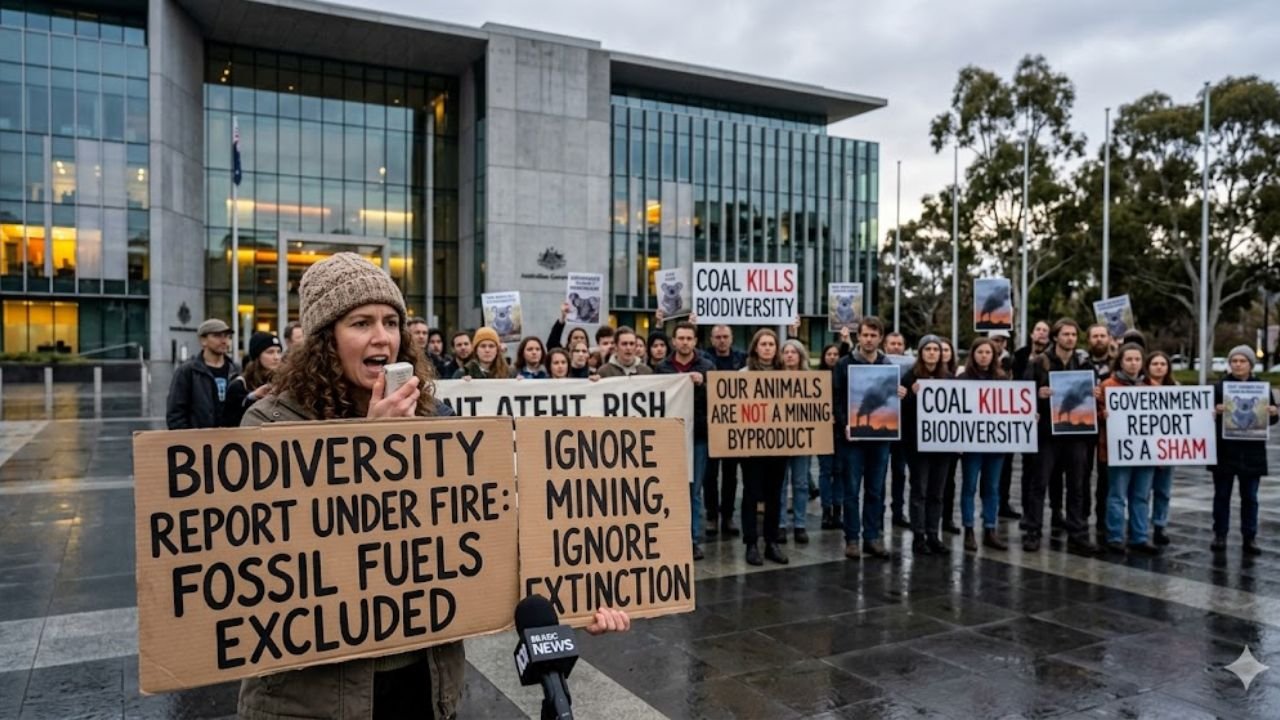
Australia is currently facing a growing conflict between its global environmental reputation and its domestic economic policies. While many countries view Australia as a protector of nature, recent developments suggest a contradiction at the core of its environmental strategy. The Seventh Report submitted under the UN Convention on Biological Diversity has sparked significant debate, with critics arguing that the federal government presents an overly optimistic view of its environmental performance.
Independent analysts and environmental advocates claim the report offers only a partial picture. A major concern is the continued reliance on fossil fuel subsidies, which support extractive industries while undermining conservation efforts. Critics argue that the report functions more as a public relations document, downplaying the negative impacts of coal and gas expansion on biodiversity.
Funding Imbalance: Nature vs Industry
The most striking issue in this debate is the imbalance in government spending. Estimates suggest that Australia allocates approximately $26.3 billion annually to activities that harm biodiversity, compared to less than $1 billion dedicated to protecting it.
More than $14.1 billion USD is directed toward fossil fuel subsidies, while biodiversity conservation receives under $0.8 billion annually. This disparity creates a scenario where conservation gains are offset by environmentally destructive industrial growth.
Comparative Spending on Australian Nature and Industry (2025–2026 Estimates)
| Expenditure Category |
Estimated Annual Funding (AUD) |
Primary Environmental Impact |
| Fossil Fuel Subsidies |
14.1 Billion |
Carbon emissions, habitat fragmentation |
| Transport Infrastructure |
8.5 Billion |
Land clearing, wildlife corridor disruption |
| Biodiversity Conservation |
< 0.8 Billion |
Habitat restoration, species recovery |
| Agriculture & Forestry Subsidies |
2.2 Billion |
Soil degradation, native vegetation loss |
Strategic Omissions in Global Reporting
Critics argue that excluding fossil fuel subsidies from biodiversity reporting allows the government to sidestep international obligations. Under Target 18 of the Global Biodiversity Framework, countries are required to eliminate harmful incentives by 2030.
However, the latest report treats climate change and biodiversity loss as separate issues, despite clear scientific evidence linking fossil fuel emissions to habitat destruction and ocean warming. This separation weakens the overall credibility of the report.
Real-World Impact on Wildlife
The omission of fossil fuel impacts has tangible consequences for Australia’s biodiversity. The country is home to over 2,200 threatened species, many of which are increasingly at risk due to climate-related changes.
Government claims that biodiversity targets are “on track” often rely on the extent of protected areas rather than their actual condition. For example, while 52% of Australia’s ocean territory is classified as protected, marine heatwaves continue to cause mass coral bleaching in the Great Barrier Reef.
Without addressing the root cause—industrial emissions—protected areas risk becoming ineffective in preserving ecosystems.
Path Forward: Aligning Policy with Environmental Reality
Experts suggest that meaningful progress requires integrating environmental priorities into economic planning. Reforming harmful subsidies does not mean abrupt withdrawal of support but rather a gradual transition toward sustainable land management and renewable energy.
Improved transparency in reporting, including acknowledging fossil fuel impacts as biodiversity losses, would provide a more accurate assessment of challenges. This approach could help bridge the gap between optimistic policy narratives and ecological realities.
FAQs
Q1 Why was the fossil fuel impact excluded from the biodiversity report?
The federal government considers fossil fuel subsidies outside the scope of biodiversity reporting. However, independent researchers argue this is scientifically unjustified, as fossil fuels are a primary driver of climate change and habitat destruction.
Q2 How much does Australia spend on harming nature versus protecting it?
Estimates indicate that for every $1 spent on conservation, approximately $25 is spent on activities that harm the environment, including fossil fuel subsidies and land-clearing initiatives.
Q3 What is the Global Biodiversity Framework?
The Global Biodiversity Framework is an international agreement adopted by 196 countries. It includes 23 targets aimed at halting and reversing biodiversity loss by 2030, including commitments to reform environmentally harmful subsidies.