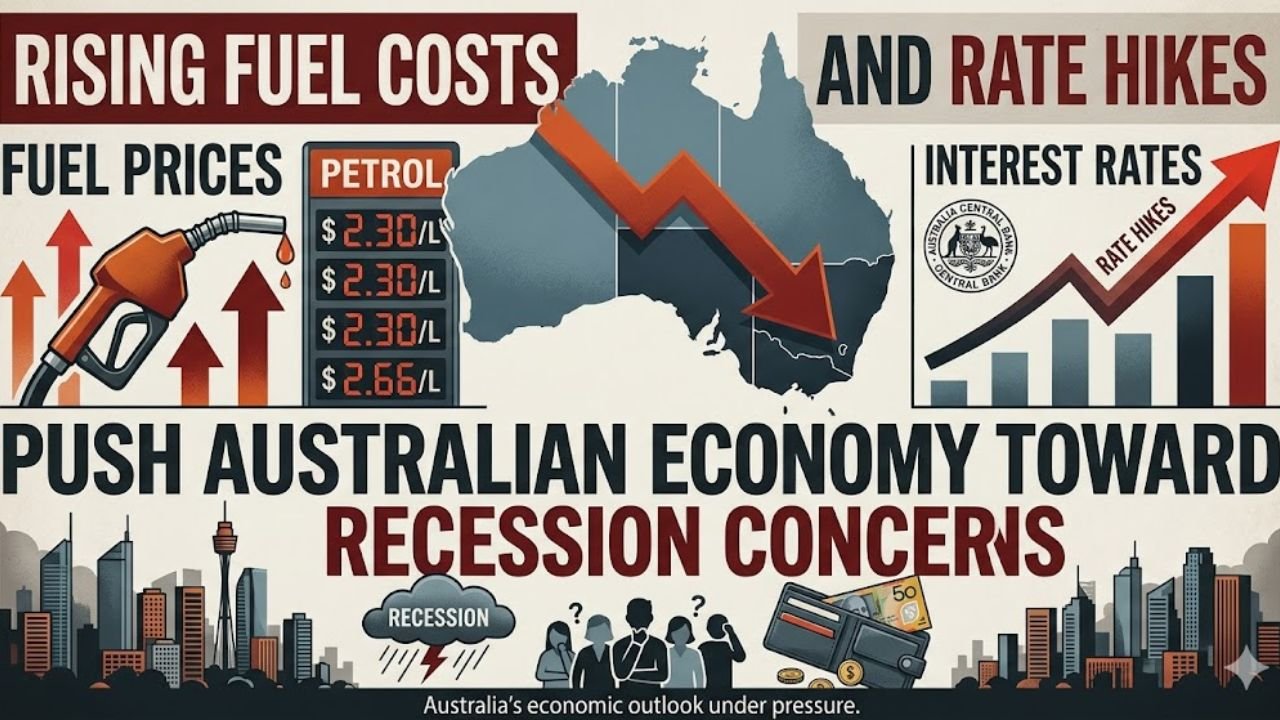
In March 2026, the RBA raised the official cash rate to 4.10%, marking its second increase in three months. This shift reflects growing concerns about inflation, driven largely by surging fuel prices amid geopolitical tensions in the Middle East. The relief households experienced in 2025 has quickly faded, replaced by renewed financial strain.
Australian households continue to grapple with a prolonged cost-of-living crisis, particularly those who recently entered the housing market and now face the risk of negative equity.
Fuel Crisis and “Sticky” Inflation
A major driver of current economic stress is the sharp rise in oil prices. Petrol costs in major Australian cities surged by over 40 cents per litre in early 2026, placing immediate pressure on consumers.
The impact extends beyond fuel stations. Increased transport costs are pushing up prices across supermarkets, construction, and essential services. With headline inflation sitting at 3.8%, above the RBA’s target range of 2–3%, policymakers have been forced to act decisively.
The end of government energy rebates has further intensified inflationary pressures, making it harder to control consumer expectations.
Mortgage Stress and Household Impact
Back-to-back rate hikes have surprised both analysts and homeowners. The latest 25-basis-point increase in March followed a narrow 5–4 board decision, highlighting internal disagreement about the economy’s resilience.
Rising interest rates are significantly affecting mortgage repayments, especially for recent buyers.
Mortgage Amount
March 2026 Increase
Total Increase Since Jan 2026
$600,000
+$91/month
+$181/month
$800,000
+$121/month
+$241/month
$1,000,000
+$151/month
+$301/month
$1,200,000
+$182/month
+$362/month
At the same time, electricity prices have risen sharply following the removal of subsidies, further squeezing household budgets.
Cooling Labour Market and Recession Fears
While unemployment remains relatively low at 4.1%, signs of weakness are emerging. Job advertisements have plateaued, and wage growth is slowing. The Treasury has revised GDP forecasts downward, with growth expected to reach just 1.6% by mid-2027.
If the RBA proceeds with another rate hike in May 2026, the cumulative impact could push Australia into a technical recession, defined as two consecutive quarters of negative growth.
The housing market is also showing signs of strain, as rising borrowing costs begin to outweigh the benefits of limited supply in major cities.
Strategic Outlook for 2026
Australia’s economic trajectory will depend heavily on global energy markets and domestic spending trends. While the RBA remains focused on controlling inflation, there is growing recognition that aggressive tightening could come at the cost of economic growth.
Governor Michele Bullock has acknowledged that while a recession is not the objective, it may become a necessary consequence if inflation remains unchecked.
Businesses are adopting a cautious approach, delaying capital investments and limiting borrowing due to high interest rates.
Opportunities in a High-Rate Environment
Despite challenges, some sectors continue to show resilience. Strong global demand for critical minerals is supporting the mining and resources industry. Additionally, higher interest rates are benefiting savers through improved returns on deposits.
The Australian government is expected to introduce targeted cost-of-living relief measures in the May 2026 budget, although their impact may be limited.
FAQs
Q1 Will there be another interest rate hike in 2026?
Financial markets and major banks consider a third rate hike in May 2026 a close call. The decision will depend on inflation data and global oil price stability.
Q2 How high will petrol prices go?
Petrol prices have already exceeded $2.20 per litre in some cities. Future price movements will depend on global supply conditions and geopolitical developments.
Q3 Is Australia currently in a recession?
As of March 2026, Australia is not in a technical recession. However, slowing growth and tightening financial conditions have increased the likelihood of a mild downturn in late 2026 or early 2027.