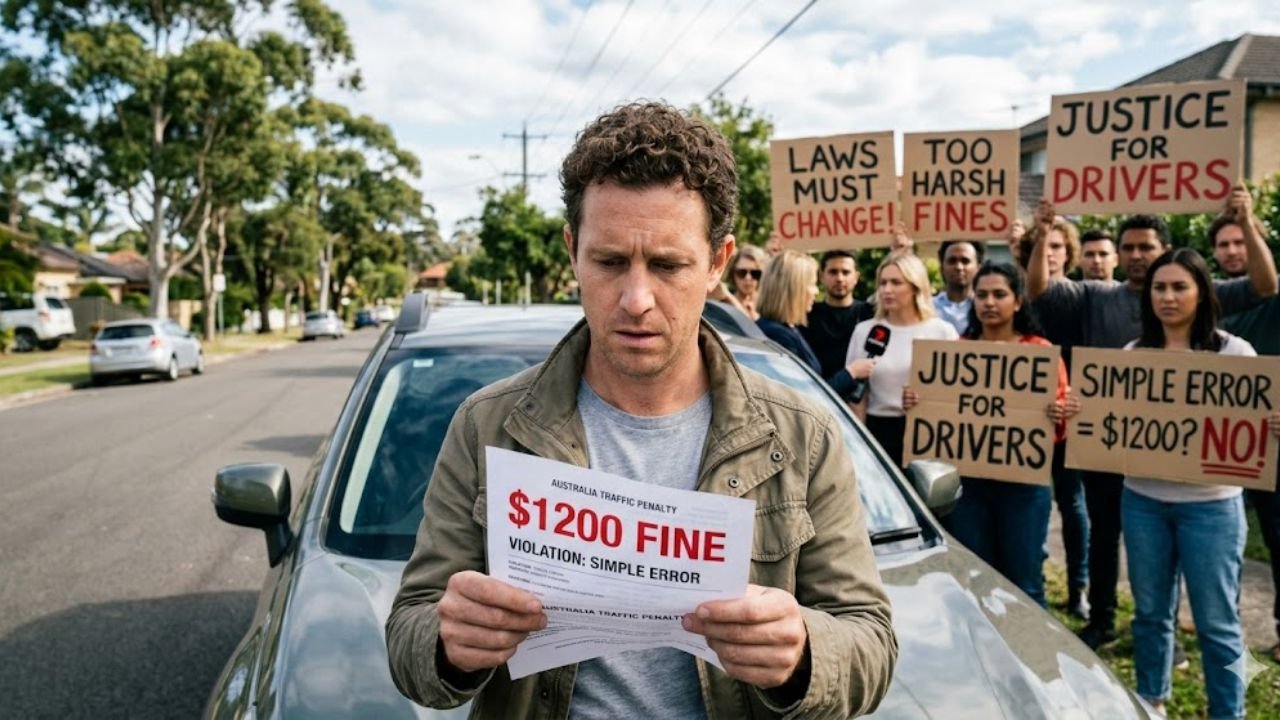
A wave of anger has flooded the Australian driving community following several high-profile cases where drivers were fined more than $1,200 for what many consider minor mistakes. These penalties, often issued under “unsafe driving” laws, are being criticized as unfair and overly harsh.
Many drivers believe that simple human errors—such as briefly touching a phone or a passenger adjusting a seatbelt—should not carry the same financial consequences as genuinely dangerous behavior. Critics argue that road enforcement is increasingly being used as a revenue-generating tool rather than a safety measure.
AI Cameras Changing Road Enforcement
Advanced AI-powered camera systems introduced in Queensland and Western Australia have significantly transformed how road rules are enforced. These cameras can monitor drivers continuously, regardless of weather conditions, and detect behaviors such as mobile phone use and seatbelt violations.
While authorities claim the technology is saving lives, many citizens say it has created stress for otherwise law-abiding drivers. In Queensland, even holding a phone while stopped at a red light is considered an offence.
High Penalties Amid Rising Living Costs
In 2026, with the cost of living rising, a single fine can equal a week’s wages for many Australians. This has intensified public frustration, with some believing the system prioritizes revenue over fairness.
| Offence Type | Typical Fine (2026) | Demerit Points | Detection Method |
|---|---|---|---|
| Illegal Mobile Phone Use | $1,251 | 4 Points | AI Detection Camera |
| Seatbelt (Driver/Passenger) | $1,251 | 4 Points | AI Detection Camera |
| Speeding (1–10 km/h) | $350 – $450 | 1 – 3 Points | Radar |
| Red Light Violation | $650 – $850 | 3 Points | Intersection Camera |
| Fatigue Violations | $1,200 | Variable | Electronic Log Systems |
The Passenger Responsibility Debate
One of the most controversial rules is that drivers can be fined if an adult passenger is not wearing a seatbelt. Many argue this is unreasonable, as drivers cannot fully control another adult’s actions.
Legal discussions in 2026 have shown increasing sympathy toward drivers in such cases. Some experts argue that requiring drivers to constantly check passengers may actually increase accident risk.
Calls for Reform
Public demand for change has gained traction across social media and petitions directed at state governments. Most people are not calling for the removal of AI cameras but rather a fairer system.
Proposed reforms include:
- A tiered penalty system based on risk level
- Warnings for minor, first-time offences
- Greater transparency in how violations are reviewed
- Shifting responsibility for seatbelts to adult passengers
Balancing Safety and Fairness
While studies suggest AI enforcement reduces distracted driving, the social impact of high fines cannot be ignored. For laws to be effective, they must also be seen as fair.
Experts believe that if penalties are viewed as excessive or predatory, public compliance may decline. By late 2026, changes to introduce a more balanced and equitable system are expected.
FAQs
Q1 Can I touch my phone if it is mounted?
No. In most Australian states, even touching a mounted phone while driving can result in a fine. Drivers must use voice controls.
Q2 Is the driver responsible for passengers wearing seatbelts?
Yes. Current laws hold drivers accountable if passengers are not properly restrained, even if they are adults.
Q3 Can AI cameras make mistakes?
Yes. False positives can occur due to lighting or clothing. Drivers can request a review or challenge fines in court.