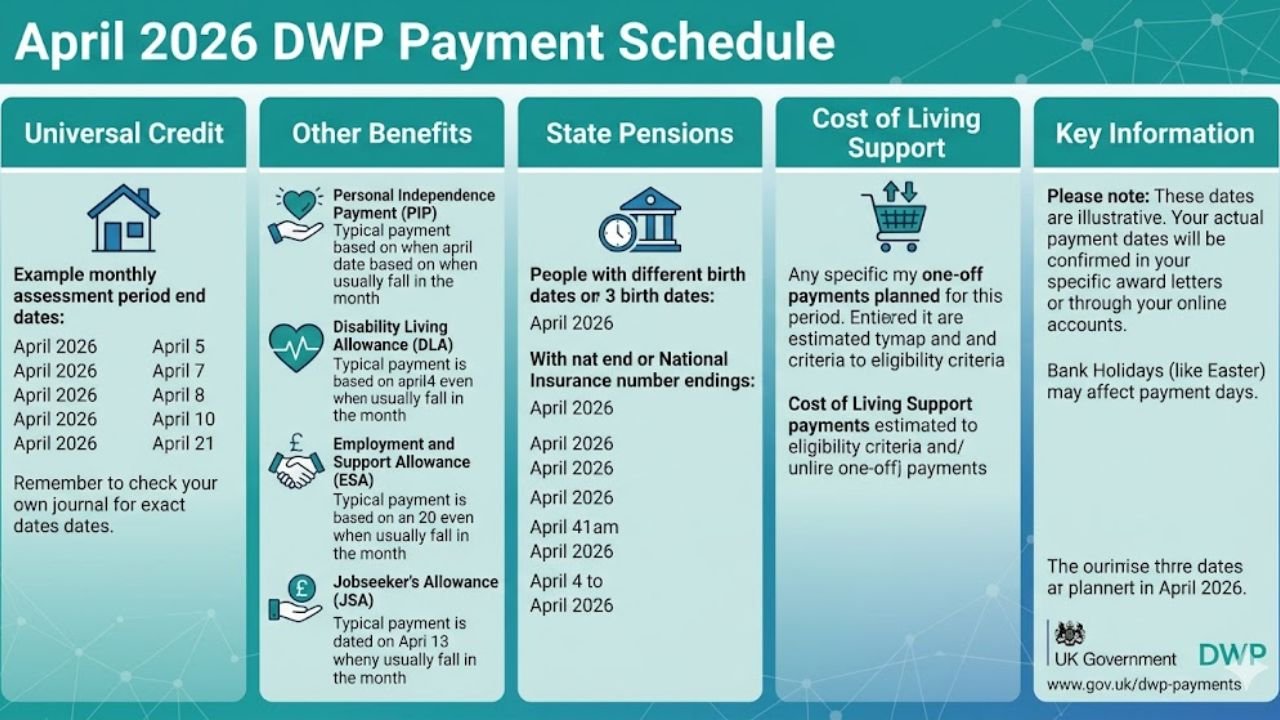
For households across the United Kingdom, April 2026 marks the Department for Work and Pensions (DWP) annual update to benefits and State Pension payments. This period brings important changes, including new payment rates and scheduling adjustments due to the Easter bank holidays.
With the start of the 2026/2027 financial year and the Easter break occurring at the same time, claimants may notice both increased payments and changes in payment dates. Careful budgeting is essential during this transition period.
Easter Bank Holiday Payment Changes
In 2026, Good Friday falls on April 3 and Easter Monday on April 6. As banks and DWP offices will be closed on these days, any benefit payments scheduled for these dates will be made earlier.
If your payment is due on April 3 or April 6, you will receive it on Thursday, April 2 instead. While this ensures funds are available before the holiday, it may result in a longer gap before your next payment.
Benefit and State Pension Increases from April 2026
From April 6, 2026, most benefits will increase to reflect inflation and wage growth. These adjustments are applied automatically, so claimants do not need to take any action.
- Most working-age benefits will increase by 3.8%, based on the Consumer Prices Index (CPI)
- The State Pension will rise by 4.8% under the Triple Lock system
- Universal Credit standard allowances will receive slightly higher increases
Updated Benefit Rates
| Benefit Type | 2025 Rate | 2026 Rate |
|---|---|---|
| New State Pension (Weekly) | £230.25 | £241.30 |
| Basic State Pension (Weekly) | £176.45 | £184.90 |
| Universal Credit (Single, 25+) | £400.14 | £424.90 |
| Universal Credit (Couple, 25+) | £628.10 | £666.97 |
| Universal Credit (Under 25) | £316.98 | £338.58 |
Changes to Cost of Living Support
The government has shifted away from one-off cost of living payments. Instead, support is now delivered through a decentralized system managed by local councils.
A new £1 billion fund has replaced the previous Household Support Fund. This funding allows councils to provide targeted assistance, including emergency cash support and temporary help with housing costs.
Additionally, the previous two-child limit for Universal Credit has been removed, allowing families with more than two children to receive support for all eligible children.
Understanding Payment Timing and Assessment Periods
DWP benefits are paid in arrears, which means some claimants may not see the full increase immediately in April.
Universal Credit claimants will only receive the updated rates if their assessment period begins on or after April 6. If your assessment period overlaps the old and new financial years, the increase may only apply to part of your payment.
Similarly, those receiving State Pension or disability benefits paid every four weeks may notice gradual changes as new rates are introduced during the payment cycle.
It is important to regularly check your Universal Credit journal or bank statements to understand how the new rates are applied.
FAQs
Q1 Why was my April payment made earlier?
Payments due on April 3 or April 6 are issued early on April 2 because of the Easter bank holidays.
Q2 Do I need to apply for the benefit increase?
No, all increases are applied automatically by the DWP and HMRC.
Q3 What is the Crisis and Resilience Fund?
The Crisis and Resilience Fund is a locally managed support system that provides emergency financial help and housing assistance to households facing financial hardship.