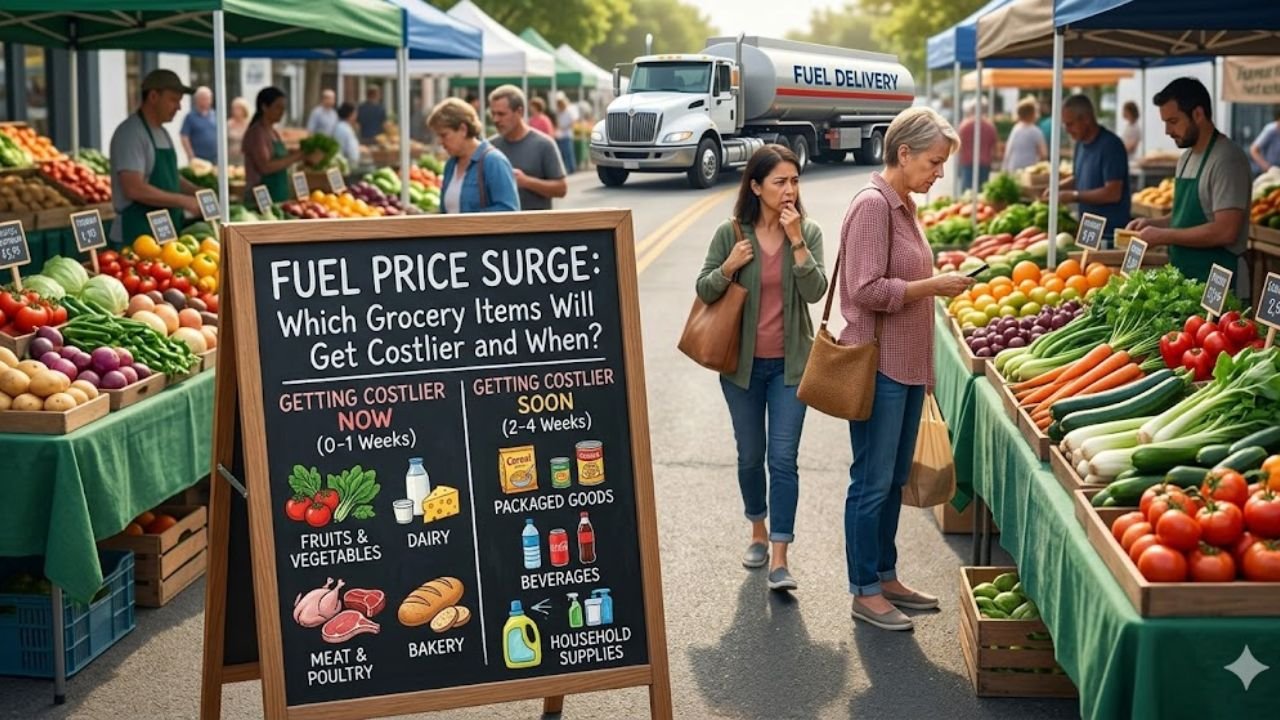
Beginning in March 2026, global oil markets entered an unprecedented period of volatility due to geopolitical tensions around the Strait of Hormuz. This instability has caused fuel prices to fluctuate dramatically, directly impacting consumer goods—especially groceries. As fuel costs rise, so do transportation, production, and distribution expenses, creating demand-pull inflation across food supply chains.
Why Fuel Prices Directly Affect Grocery Costs
Fuel is a core component of the food supply chain. From farm equipment powered by diesel to refrigerated trucks transporting perishables, energy costs play a major role in determining final retail prices. When diesel prices rise, the cost of harvesting, processing, and transporting food increases significantly.
In 2026, experts estimate that shipping costs for food distribution depend on fuel by as much as 50% to 60%. When shipping costs surge by 20% to 30% within weeks, retailers are forced to pass these costs on to consumers to maintain profitability.
Why Fresh Produce and Dairy Show Faster Price Changes
Fresh fruits, vegetables, and dairy products rely heavily on rapid transportation and cold chain logistics. These items are highly perishable and must reach stores quickly to avoid spoilage. Because of this urgency, any increase in fuel prices is reflected almost immediately in their retail prices.
The high energy consumption required for refrigeration and quick delivery makes these categories extremely sensitive to oil price fluctuations.
Estimated Price Sensitivity of Grocery Categories (2026)
Grocery Category
Lead Time for Price Adjustment
Primary Cost Driver
Estimated Price Increase Risk
Fresh Vegetables
1–2 Weeks
Local Transport & Harvesting
High (5%–8%)
Milk & Dairy
2–3 Weeks
Refrigerated Distribution
Moderate-High (4%–6%)
Processed Foods
2–4 Months
Packaging & Global Shipping
Moderate (3%–5%)
Meat & Poultry
1–2 Months
Animal Feed Transport
Moderate (2%–4%)
Rice & Grains
3–6 Months
Bulk Storage & Sowing
Low (1%–3%)
The Lag Effect in Processed Foods
Unlike fresh items, processed and packaged goods such as cereals, canned foods, and frozen meals experience delayed price increases. These products are typically manufactured in bulk and have longer shelf lives, meaning current store inventory may have been produced when energy costs were lower.
However, rising fuel prices eventually impact these goods through higher packaging costs (plastics and metals derived from petrochemicals) and increased global shipping expenses. A secondary wave of price increases is expected by mid to late 2026.
How Regional Logistics Affect Prices
Geography plays a critical role in determining how much consumers pay. The greater the distance between farms and consumers, the higher the transportation costs. Urban areas that rely on long-distance supply chains are more vulnerable to fuel price increases than regions closer to agricultural production zones.
Retailers are also adopting dynamic pricing strategies, meaning prices may fluctuate frequently depending on shipping routes and fuel surcharges, making budgeting more difficult for consumers.
Smart Shopping Strategies During Fuel Inflation
Buy locally produced and seasonal foods to reduce transportation costs
Switch to store-brand products to save money
Stock up on non-perishable goods before price increases occur
Focus on bulk purchases of essentials with long shelf lives
These strategies can help households manage rising food costs while waiting for energy markets to stabilize.
FAQs
Q1 Which grocery items will increase in price first?
Fresh fruits and vegetables typically increase in price first due to their reliance on rapid transportation and refrigeration, often within one week of fuel price hikes.
Q2 Will bread and rice prices go up immediately?
No, grains and non-perishable foods usually take 3–6 months to reflect price increases because they are stored in bulk and have longer shelf lives.
Q3 Does buying local help save money?
Yes, locally sourced foods typically have lower transportation costs, making them less affected by fuel price fluctuations and often more affordable during a fuel crisis.