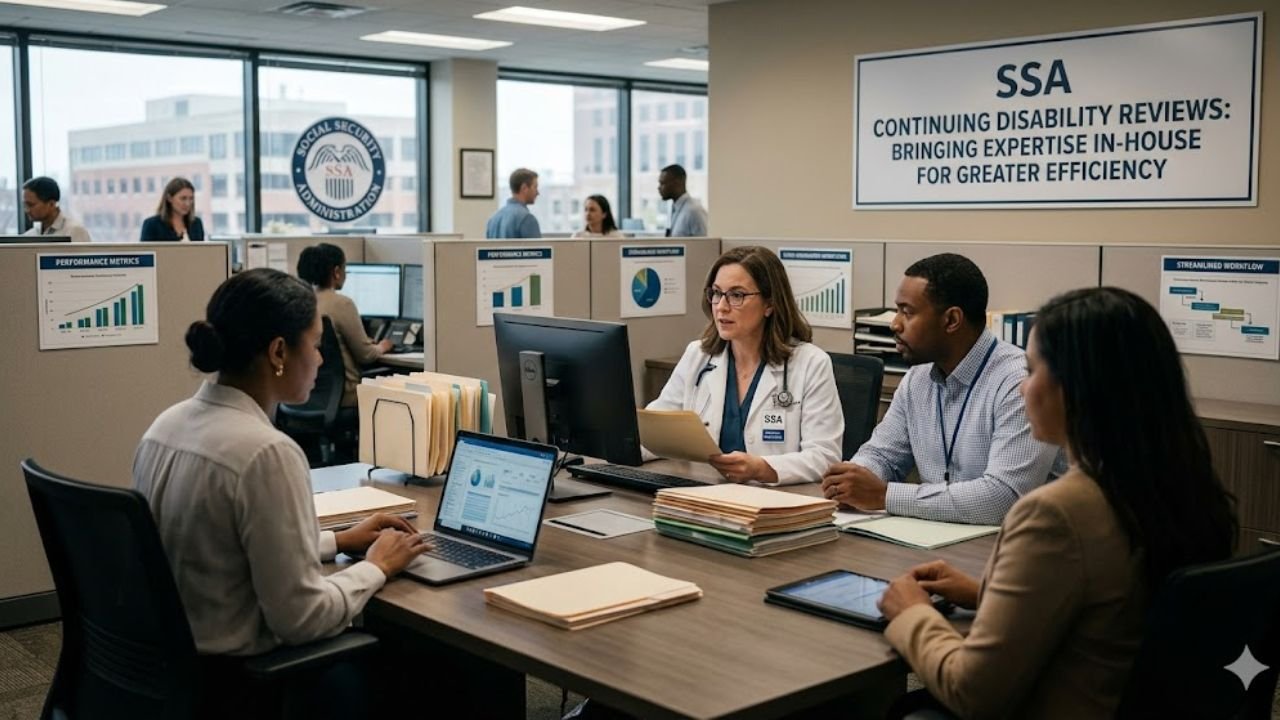
The Social Security Administration (SSA) is making a significant operational change. State medical Continuing Disability Reviews (CDRs) will now be handled solely by the SSA’s Disability Case Review (DCR) site. This move is intended to strengthen federal oversight, reduce improper payments, and allow state Disability Determination Services (DDS) offices to focus more on processing new disability applications and reconsideration cases.
What Are Medical Continuing Disability Reviews?
Continuing Disability Reviews, commonly called CDRs, are periodic evaluations used to determine whether individuals receiving disability benefits still qualify for those benefits. The SSA is legally required to conduct these reviews and generally performs them about every three years. In cases where a medical condition is not expected to improve, reviews may occur less frequently.
During a review, the SSA examines updated medical records, treatment history, and any changes in a beneficiary’s condition to determine whether the individual still meets the medical requirements for disability benefits.
There are two primary types of reviews:
- Medical CDRs: These reviews determine whether a person remains medically disabled.
- Work CDRs: These reviews evaluate whether a beneficiary is earning income above the level considered substantial gainful activity.
If the SSA determines that a beneficiary no longer meets the medical disability criteria, benefits may be terminated. However, beneficiaries have the right to appeal the decision and, in some situations, may continue receiving payments while the appeal is pending.
Why SSA Is Internalizing Medical CDRs
Historically, most disability determinations—including many medical CDRs—were processed by state DDS offices. Under the new approach, SSA is shifting the responsibility for medical CDRs to its federal Disability Case Review site. This site has already handled initial disability claims, reconsiderations, and medical CDRs for certain regions.
According to the SSA, centralizing the review process is expected to streamline operations, strengthen oversight, and improve the overall integrity of the disability programs. A more centralized system may also help reduce improper payments and ensure more consistent decision-making.
The agency has faced pressure to increase processing speed and efficiency. As of February 2026, the SSA reduced its initial disability claims backlog by more than 33%, bringing it down to roughly 831,000 claims. This progress has been attributed to process improvements and operational changes.
By transferring medical CDR responsibilities away from DDS offices, those state agencies can concentrate more on new disability claims and reconsiderations, potentially speeding up those decisions.
How This Shift Impacts Current SSDI and SSI Beneficiaries
For individuals currently receiving disability benefits, the overall CDR process will remain largely the same. Beneficiaries may receive either the short disability update form (SSA-455) or the longer Continuing Disability Review Report (SSA-454). Receiving one of these forms indicates that a medical review is likely underway.
Beneficiaries must still provide updated medical information, including treatment records, physician notes, and test results. If more information is needed, the SSA may schedule a consultative examination.
The most noticeable changes will occur behind the scenes. Centralized processing allows the SSA to use electronic medical records and national data systems more consistently. This may result in faster decisions—both in cases where benefits continue and in situations where the SSA believes a medical improvement has occurred.
Key Numbers at a Glance
| Item | Recent Detail |
|---|---|
| Typical medical CDR interval | About every 3 years; 5–7 years if improvement not expected |
| Main goal of medical CDRs | Ensure beneficiaries still meet medical disability rules |
| Initial disability claims backlog | Reduced by over 33% to about 831,000 (February 2026) |
| Processing site for medical CDRs | SSA’s federal Disability Case Review (DCR) site |
| DDS focus after transition | Initial disability claims and reconsideration cases |
This operational shift follows other recent CDR-related developments. During parts of 2024, the SSA temporarily paused many disability reviews before resuming them later in the year. That pause created additional pressure to address pending reviews.
In 2026, some advocates and legal analysts expect increased review activity. Updates to schedules and evaluation criteria may also lead to more frequent reviews for certain medical conditions categorized as having “possible improvement.”
Preparing for a Medical CDR in the New System
Although the SSA is moving medical CDR processing in-house, the best preparation strategies for beneficiaries remain the same. Regular medical appointments, following treatment recommendations, and keeping organized records of test results and physician notes can help ensure a smoother review process.
When a CDR form arrives, it is important to complete the SSA-455 or SSA-454 accurately and submit it before the deadline, along with any requested documentation. Providing complete information can prevent delays or misunderstandings about a beneficiary’s medical condition.
Beneficiaries should also understand their rights. If the SSA concludes that a medical condition has improved and decides to stop benefits, individuals have the right to appeal the decision. In many cases, beneficiaries can request that payments continue temporarily while the appeal is being reviewed.
The SSA must demonstrate medical improvement related to a person’s ability to work before benefits can be terminated. For individuals with complex medical conditions, consulting a disability attorney or advocate after an unfavorable CDR decision may be helpful.
FAQs
Q1 Will everyone on disability receive CDRs more often now?
No. The shift to federal processing changes who reviews the cases, but it does not alter the legal rules governing how often disability reviews occur.
Q2 Do I still work with my local SSA office during a CDR?
Yes. Local SSA offices and field staff remain the primary point of contact for beneficiaries, even though medical review decisions may now be processed at federal Disability Case Review sites.
Q3 Will I lose my benefits because of a CDR?
Not necessarily. Many beneficiaries complete disability reviews and continue receiving benefits because their medical condition has not improved enough for them to no longer meet the SSA’s disability requirements.